



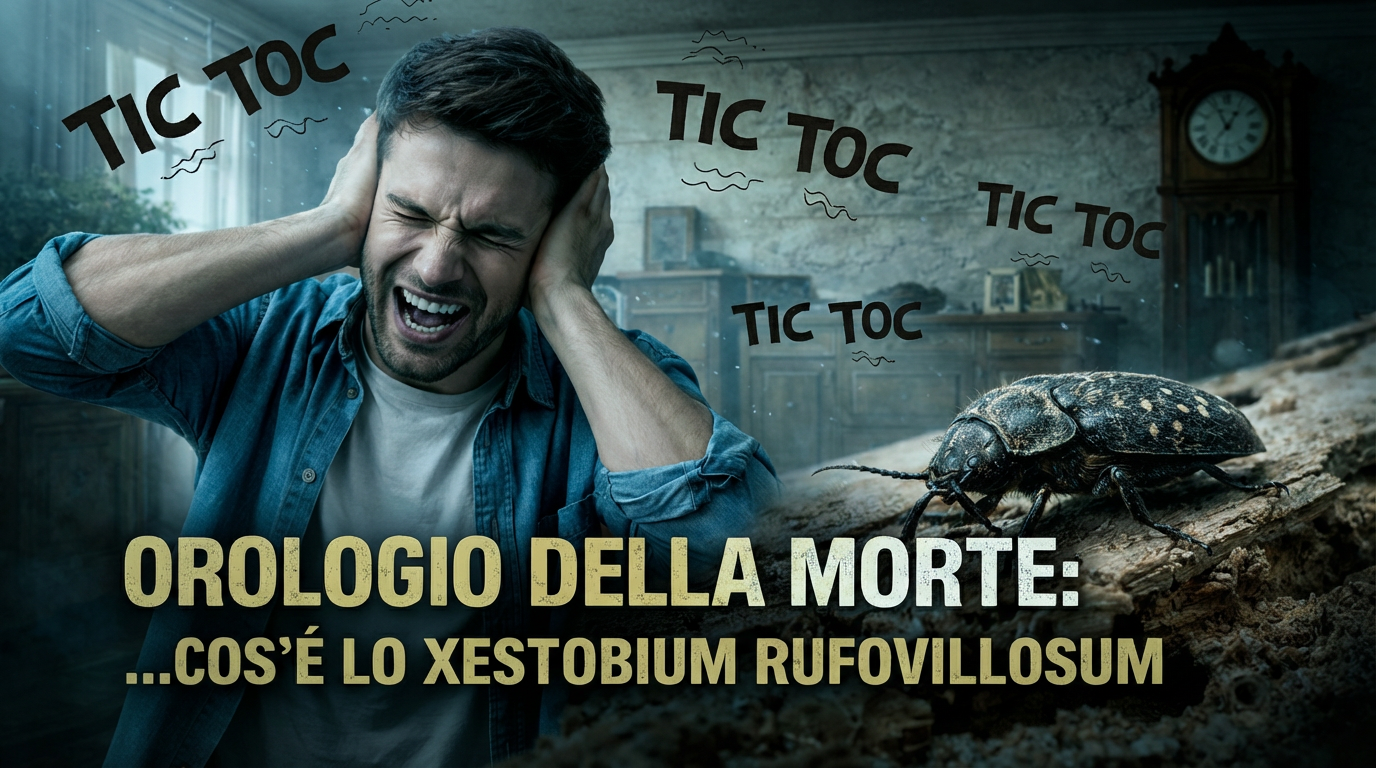
In the silence of old houses, especially during nighttime hours, it is not uncommon to hear a regular ticking sound coming from the wood. A dry, almost mechanical noise that for centuries has fueled superstition and fear. This phenomenon is linked to a very specific insect: the Xestobium rufovillosum, commonly known as the “deathwatch beetle”.
Despite its unsettling name, there is nothing supernatural about it. It is a wood-boring beetle, meaning an insect that feeds on wood, but one that can cause serious damage to structures and furnishings, especially in historic buildings or damp environments.
Why it is called the “deathwatch beetle”
The name comes from the characteristic ticking sound produced by the insect. This sound is not random: the male strikes the wood with its head to attract the female during the mating period. In quiet environments, such as old houses or rarely used rooms, this noise becomes clearly audible.
In the past, without knowing the origin of the sound, it was associated with omens of death, especially when it occurred near sick individuals. This is how the legend that still accompanies this insect today was born.
Life cycle and behavior
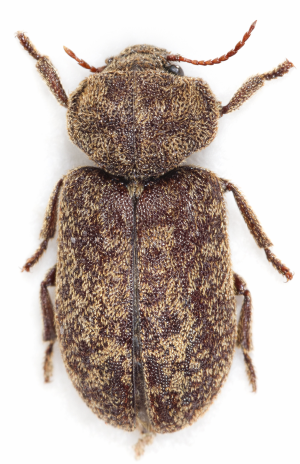 The Xestobium rufovillosum has a long life cycle and develops almost entirely inside the wood. The most damaging phase is the larval stage, which can last several years.
During this time, the larvae bore deep tunnels while feeding on the wooden structure, gradually compromising the material’s strength. The adult insect emerges only at the end of development and lives for a few weeks, with the sole purpose of reproduction.
The most common signs of its presence are:
- circular exit holes of about 2–4 mm
- presence of frass (granular powder) near the wood
- internally weakened structures
- audible ticking during warmer periods
Which types of wood are attacked
Unlike other woodworms, this insect does not attack healthy wood. It prefers very specific conditions that favor its development and proliferation.
In particular, infestations are more frequent in the presence of:
- hardwoods such as oak
- damp and poorly ventilated environments
- material already degraded by fungi
For this reason, its presence is often a sign of a broader issue related to moisture and wood deterioration.
Risks for structures and buildings
The Xestobium rufovillosum represents a real risk, especially for historic buildings and load-bearing structures. The tunnels created by the larvae can compromise the solidity of beams, floors, and antique furniture, making the damage difficult to detect in the early stages.
Acting promptly is essential to avoid more invasive and costly structural interventions.
How to eliminate Xestobium rufovillosum
Eradicating this pest requires specific techniques capable of acting deep inside the wood, where the larvae develop.
Among the most effective and modern solutions is microwave treatment, which makes it possible to eliminate the infestation without damaging the material and without the use of invasive chemical substances.
W13 uses microwave technology to eliminate this pest as well, ensuring targeted, safe, and highly effective action even in the most complex cases.